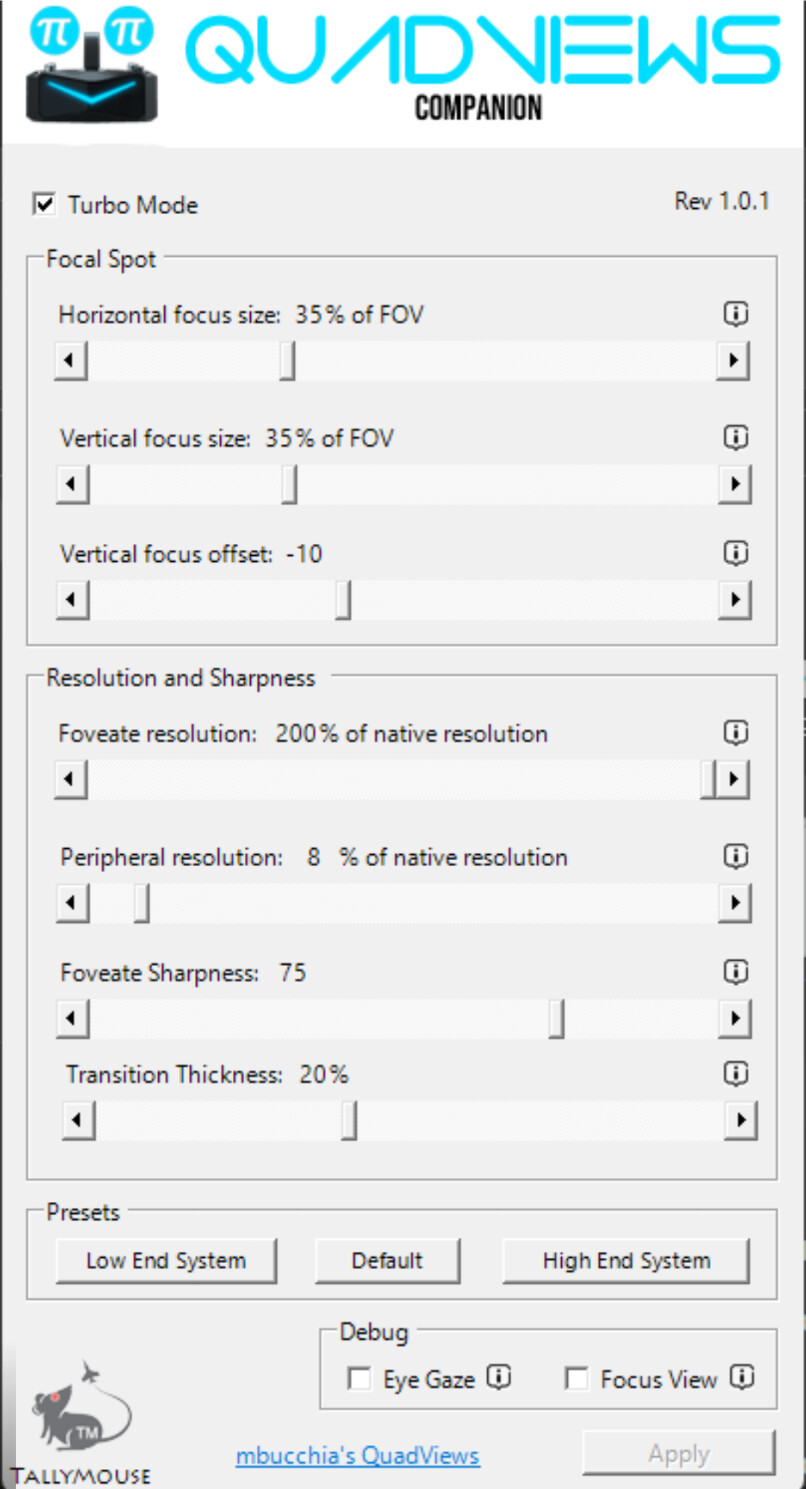
Quadviews Companion makes modifying the settings within mbucchia’s implementation of QuadViews a breeze!
mbucchia’s QuadViews is an essential download if you fly in DCS, and you have eye-tracking capabilities.
However, for many, the settings.cfg file setup and modification can prove difficult when trying to find the best Dynamic Foveated Rendering settings for DCS.
This handy utility not only automatically creates the initial QuadViews user settings file, but lets you load, modify, and update the settings without needing to open the config file at all.
OMG OMG I’ve just received my Pimax Crystal and “X” (fill in the blank)
Posted By TallyMouse on r/pimax
What??? It’s traveled all the way here from China and the batteries for the HMD and the controllers are not fully charged??? Whaaaa!?? Maybe I should charge them…
It the HMD just doesn’t turn on:
Turn on your PC.
Ensure that the switch on the top-righthand-side of the HMD is set to PC, and not AIO.
Place the DP plug into a DP socket on your GPU
Put the USB2 plug (the shorter one) into a powered USB2 hub. Ensure that the USB2 hub is actually plugged into a USB2 socket (preferred) or USB3 socket on your motherboard.
Put the USB3 plug (the longer one) directly into a USB3 socket in the back of your motherboard.
Place the HMD on the desk next to you, and hold down the power button and count to 6 or 7 seconds in your head.
The blue LED on the battery will come on, you see light coming out of the lenses, the main HMD light will flash white 3 times, and then turn blue. About another 8-10 seconds later, the “Disconnected” message in the Play software will change to “Connecting” then “Connected” then finally, “Screen off” (20seconds after not putting it on your head)
It doesn’t connect:
You don’t see “disconnected” when you open Pimax Play?
Uninstall Pimax Play
Reboot
Reinstall Pimax Play
Turn on your Crystal, as above.
IF THAT DOESN’T WORK THEN YOU MAY NEED TO RESET THE WHOLE HMD
Place it on your head, fully plugged into everything.
While looking into the darkness (you’re now used to this), hold down the HMD power button for 30 seconds. It should finally reset, and a Pimax logo will come up on the screen, followed by a “dark screen” boot sequence. This will verify that your HMD isn’t dead.. and that the screens actually work.
Then:
Turn off your PC
Remove the battery from the back of the HMD
Remove both USB2 and USB3
Turn PC back on
Reinsert battery
Connect USB2 first - that’s the shorter plug
Finally connect USB3 straight into your PC’s motherboard - that’s the longer plug
Start Pimax Play
Place the HMD on the desk next to you, and hold down the power button and count to 6 or 7 seconds in your head.
The blue LED on the battery will come on, you see light coming out of the lenses, the main HMD light will flash white 3 times, and then come on blue. About another 8-10 seconds later, “Disconnected” will change to “Connecting” then “Connected” then finally, “Screen off”
First of all, a huge thanks to the VR (and Pimax) community, obviously Mbucchia and Ominwhatever and Tally Mouse. If this is useful for you, please consider donating to Mbucchia, or subscribing to Omni’s channel.
Why Quad Views
Why do you want Quad Views for DCS or Pavlov VR? Two main benefits:
– FPS boost
– Able to run a much higher resolution (inside the area you are viewing)
How Quad-Views-Foveated works and how it’s different from Dynamic Foveated Rendering
Dynamic Foveated Rendering (with the Pimax Crystal) works by rendering your focus area in full detail, and rendering the area outside of your vision in less detail. Mostly the shadow and edge details are affected. There is a huge performance boost by not rendering the areas you’re not looking at in full detail, typically 10 to 40%. The total pixel amount however, is unchanged.
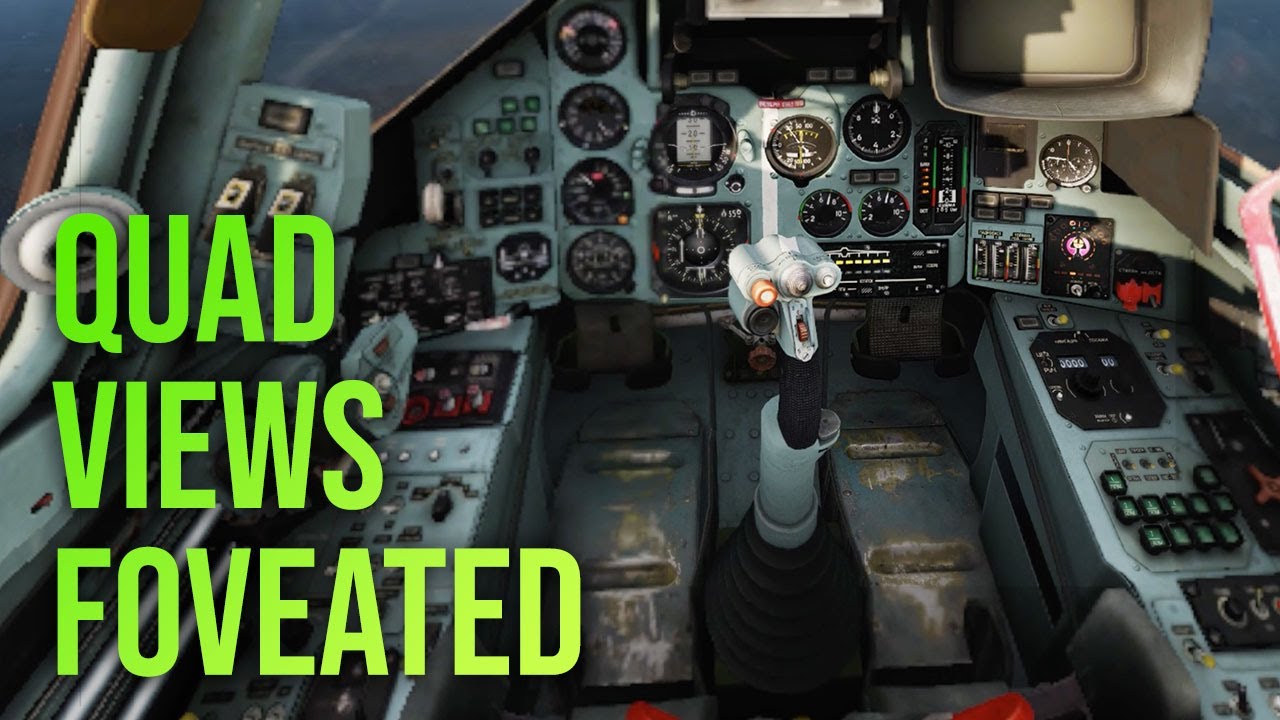
Quad-Views Foveated works differently. It directly lowers the resolution in the non-focus areas, and keeps the same pixel amount (or more likely: increases the pixel amount) in the focus area. For most people, the total pixel amount generated is drastically lower. This also gives a huge performance boost.
Demo video and Resolution & FPS comparison:
Visual comparison:
How to set it up
Mbucchia already wrote an extensive guide here. We take you through the steps again here as well.
We assume you already have:
– Pimax Play installed
– A Pimax Crystal connected
– OpenXR Toolkit installed (if not, click here)
– PimaxXR (if not, click here, and make sure eye-tracking is enabled)
Setup from there isn’t too complicated but you cannot skip a single part.
Step #1 – Pimax Play
Make sure you Enable eye-tracking!
Step #2 – Download Quad-Views-Foveated
Click here. Only install Quad Views after you install OpenXR Toolkit. (If you somehow managed to install Quad-Views-Foveated before OpenXR Toolkit, you’ll have to re-install.)
– Enable Quad-Views in PimaxXR
Step #3 – How to run DCS with Quad-Views-Foveated
You must run DCS in multi-threaded (MT) mode.
If you’re using OpenBeta:
If you are running in OpenBeta, create a shortcut to the dcs.exe file under the bim-mt folder where DCS is installed.
If you’re using Steam:
If you are running in Steam Edition, you must go to the DCS World’s Properties inside Steam, go to the General tab, and make sure the Launch Options has been set to “Play MT Preview”.
You’ll also need to download and install OpenXR-Eye-Trackers, if you use SteamVR:
Step #4 – Change two settings in DCS
Check for two settings in DCS itself.
– Inside “VR”, disable ‘Bloom effect’
– Inside “System”, disable ‘Lens Effects’
Step #5 – Restore defaults
If you have used OpenXR Toolkit before, some settings may be incompatible with Quad-Views-Foveated. To ensure compatibility, we suggest you:
Enable safe-mode in OpenXR Toolkit
Run DCS World with OpenXR Toolkit, go into Menu> Restore Defaults
After that you can disable Safe mode again
Enable safe mode:
Restore defaults:
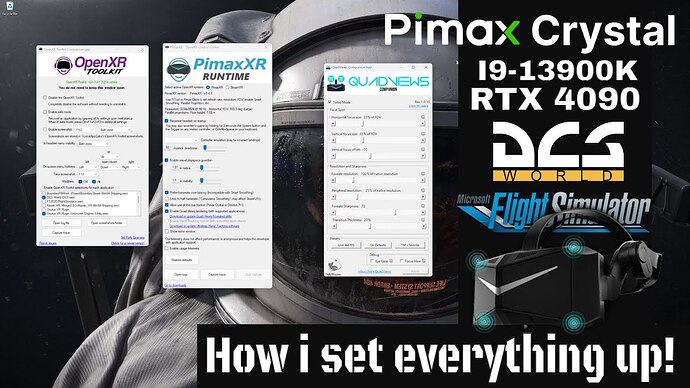
Step #6 – Tally Mouse companion app
Tally Mouse made a companion app to ease tweaking settings. It’s available to download here:
These are the settings we used on our 4070ti.
Step #7 – Try it!
It’ll probably be obvious from the FPS boost, but you can make sure and see if Quad-Views is initializing successfully or not, with or without eye tracking, by going to:
C:\Users[User]\AppData\Local\Quad-Views-Foveated
And open the log. If working, it should look like this:

 Source r/pimax
 Source OpenMR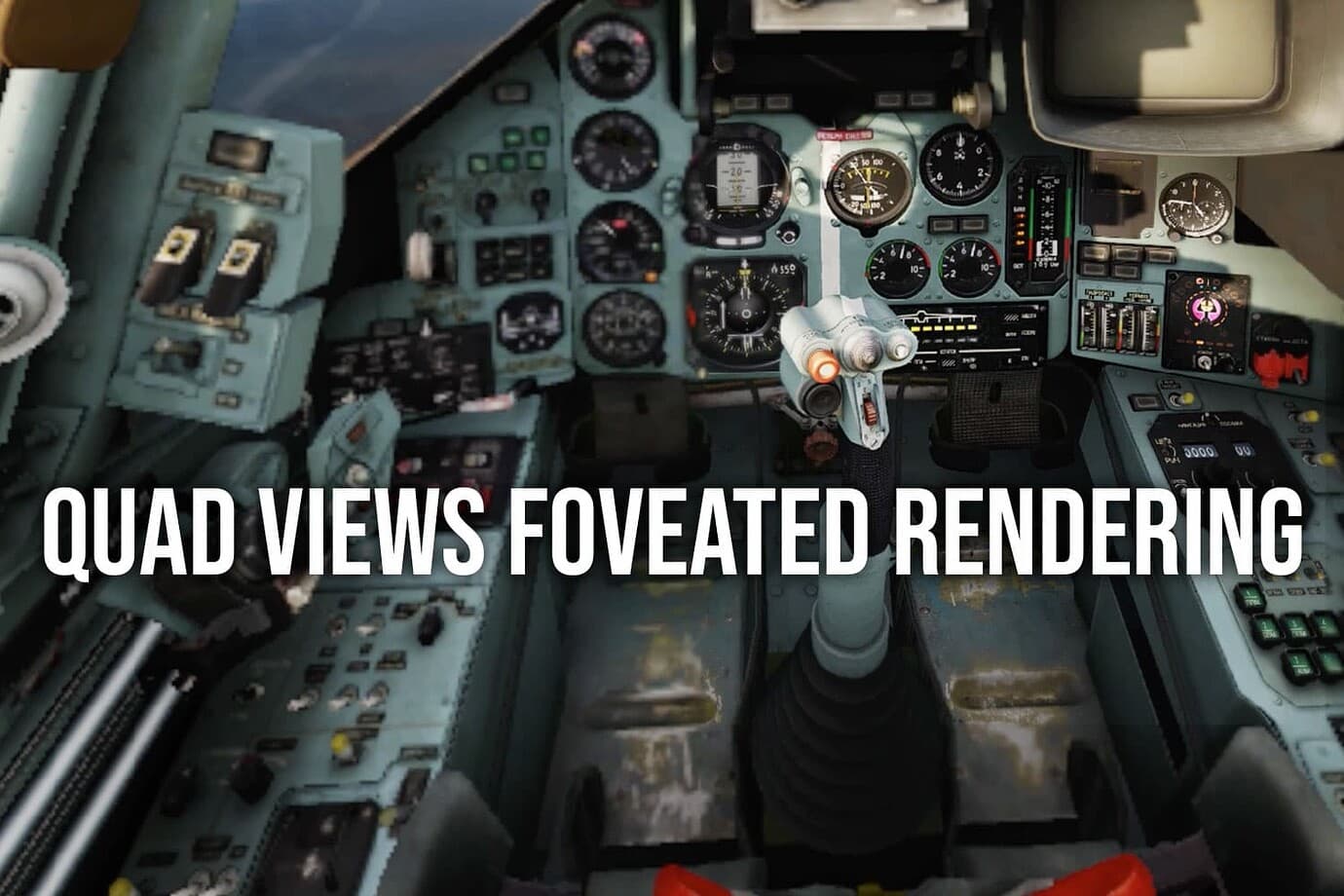


 OpenMR Community
 Official pimax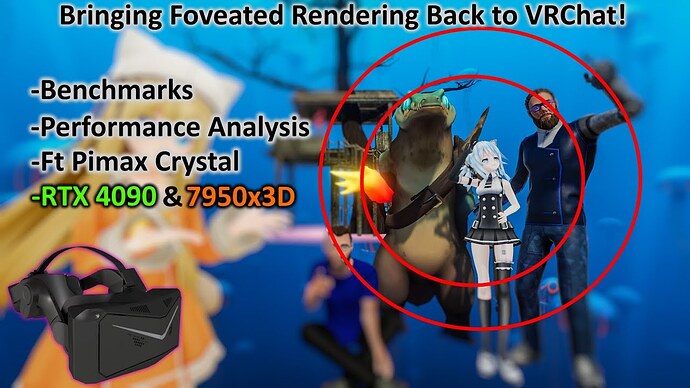

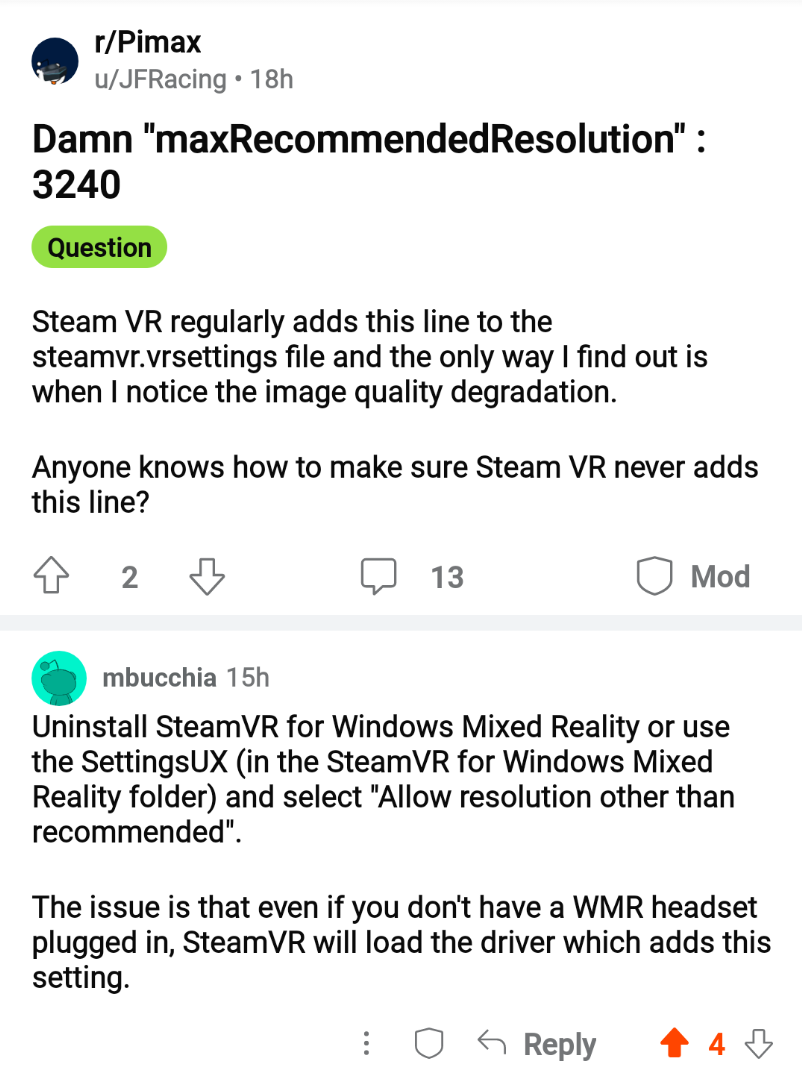
 Source r/pimax

 (Beta) on r/pimax